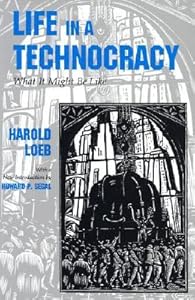
Life in a Technocracy: What It Might Be Like By Harold Loeb
Written during the 1930s; the premise is that we don't lack the capacity to produce enough, but rather that the distribution is flawed and inefficient. The critique over distribution isn't entirely lacking merit, but as always with these utopian schemes, the solution given is less than appealing.
Current governments are almost a model of inefficiency so the politicians would have to go unless kept for showmanship without any real power; monopolies are wonderful as having one mega company per industry sector is more efficient than having 50 companies competing with each other. A new medium of exchange is also recommended: Ergs - given as a ration and then priced via the amount of energy used per product produced. This might be an engineer's utopia if you follow this author, but it isn't a view I share.
Nonetheless still a worthwhile read. Technocracy; while it isn't pure Communism, certainly draws some elements from it. The disdain for democracy is well evident; voting by the people must go in such a brave new world. When one reviews such modern day calls for agile governance one certainly sees certain ideas of technocracy that still exist in the present day.
This work from 1933 expounds on the merits of creating a utopian society through technocracy, predicting the future of art, education, religion and government under the leadership of technical professionals. It encompasses the social and economic theories of the pre-depression era. Life in a Technocracy: What It Might Be Like
Komentar
Posting Komentar